

Editorial
International educational journals play a vital role in advancing the field of education by facilitating the dissemination of research findings, innovative practices, and theoretical advancements on a global scale. However, the number of scholarly journal publications on education in Sri Lanka is limited. Therefore, scholars in the education field in Sri Lanka have few opportunities to publish their research work. The Department of Social Science Education in the Faculty of Education tries to fill this gap. The outcomes of the numerous research projects completed by postgraduate students pursuing advanced degrees such as the M. Ed., M.Phil., and Ph.D. in the International Journal of Social Science Education are significant.
The study by Varatharajan Balamurali and Sabaratnam Athirathan looks at the connection between students’ performance in mathematics in type II schools in the Jaffna district and the domain aspects influencing the process of learning and teaching mathematics. They note the domain factors that impact the mathematics learning-teaching process: teacher knowledge, effective communication, teaching methodology, teacher attitude, lesson management, classroom psychological environment, teacher motivation, teacher-student relationship, student attitude, learning readiness, and student self-motivation.
Kaushalya Perera, Jeevani Herath, and Amarasuriya investigate the role of mindfulness meditation in enhancing teachers’ immunity to workplace stressors. They reviewed literature focusing on the role of mindfulness meditation in enhancing teachers’ immunity to workplace stressors through teacher immunity to
workplace stressors and the need for supporting teachers through interventions such as meditation. Further, they explained the proposed study in detail.
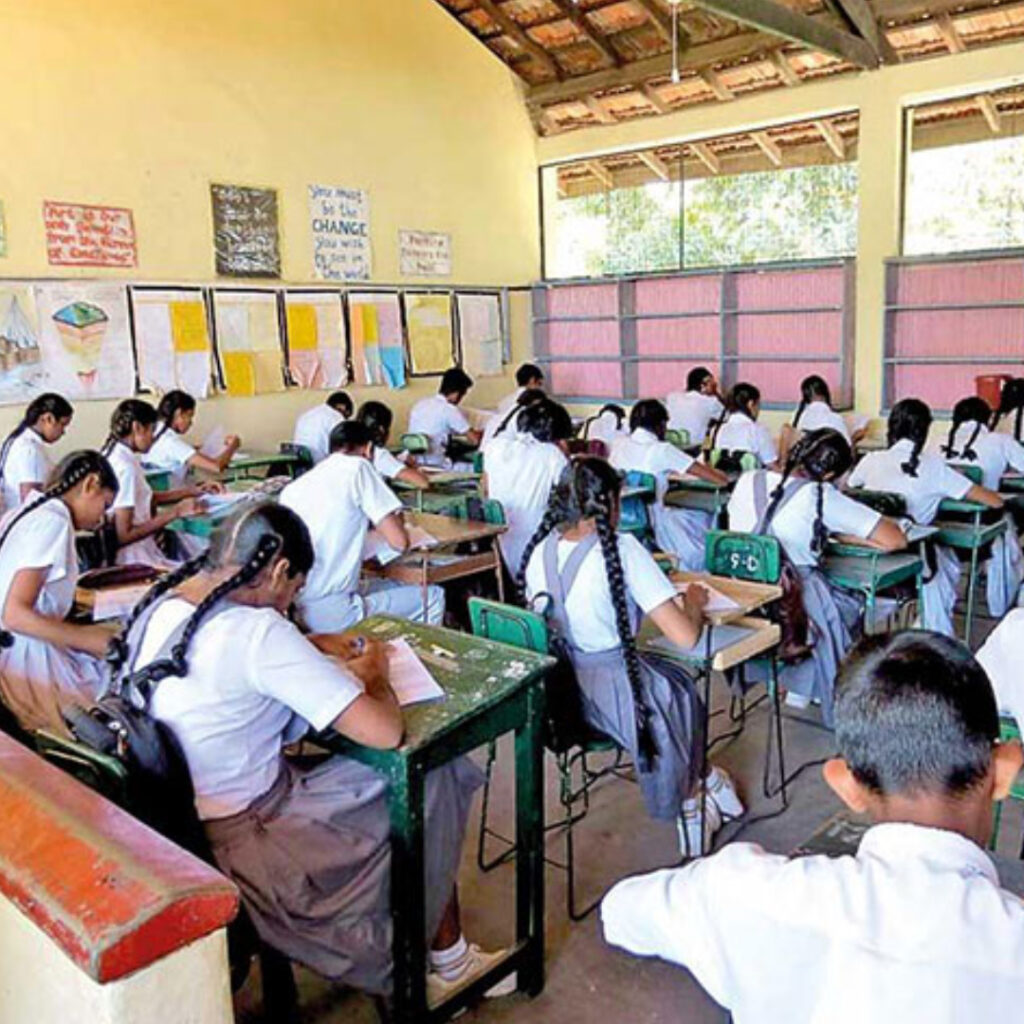
Kosala and Indigahawela examined the application of school-based management to the growth of small schools in Sri Lanka. The study’s conclusions show that the principal directs the school in implementing a participative decision-making strategy for its operations. They recommended enhancing the principal’s and the School Development Executive Committee’s leadership capacities regarding administration and school development. They said they would also consider consolidating adjacent schools to share resources and increase student enrollment efficiently.
Pratheeban examined the connection between student-teachers’ academic attainment (AA) and their preparedness for self-directed learning (SDLR). To achieve the said target, he examined the association between academic attainment (AA) and self-directed learning readiness (SDLR) among student- teachers pursuing the Master of Education and Postgraduate Diploma in Education programs at the University of Jaffna. He also delved into the aspects of SDLR connected to AA in student instructors. Six elements of self-directed learning (SDLR) were evaluated through the use of a self-created questionnaire with thirty items and a 5-point Likert scale: self-motivation (SM), goal orientation (GO), time management (TM), information seeking (IS), self-regulation (SR), and collaboration and communication (CC). Student-teachers demonstrated a significant degree of SDLR, according to his findings. Significant disparities were discovered regarding the course taken and the ages of the participants. There were notable correlations between age and communication, cooperation, and self-motivation. Except for a considerable gender-based variation in self-regulation, there are no differences in gender, marital status, or the stream followed in the Advanced Level. By highlighting the importance of developing SDL skills, particularly in self-motivation, information-seeking, teamwork, and communication, this study contributes to a better understanding of the SDLR-AA link. Its observations guide educators in
promoting student-teacher SDLR and identifying demographic effects for the benefit of institutions and legislators.
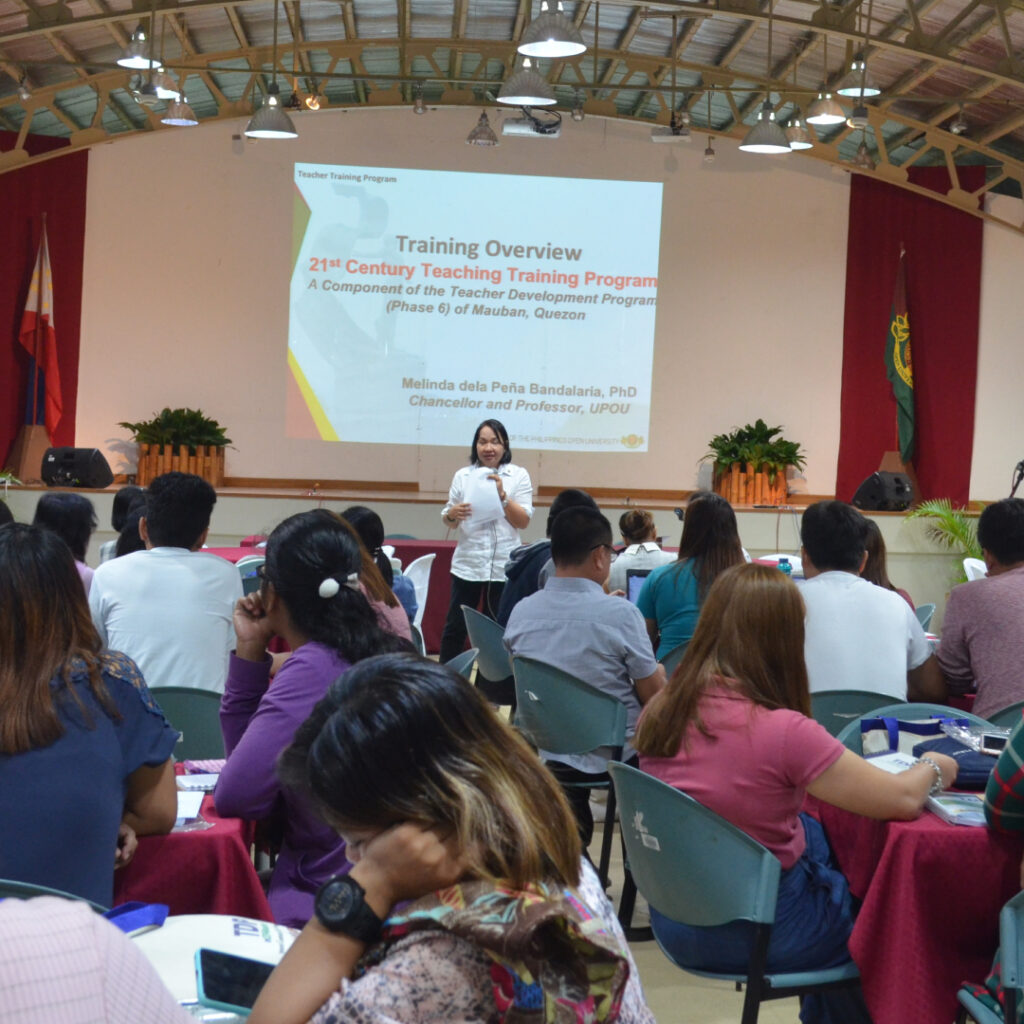
Samuduni and Dahanayake focused on how school-based professional teacher development (SBPTD) programs help teachers advance their professional skills. They note that SBPTD was deemed an excellent professional teacher competency development program by the principals and teachers. Despite the need, the study’s conclusions showed that the teachers lacked the incentive to become competent. The principals’ main worry about the SBPTD program was the low teacher participation rate. Since the SBPTD program placed a minor emphasis on developing social competencies, they recommended giving it more attention. Financial issues led to a need for more planned and consistent SBPTD programming at the school level.
Sivanandan investigated how school administration decisions might improve community and school relations. His research concluded that schools frequently used indirect, external, direct, and neutral strategies to elicit community involvement and raise student accomplishment. There was a somewhat positive correlation between the management’s actions and the school-community relationship. They recommended that a strong team of principals, instructors, parents, former students, and well-wishers be formed and effectively managed to improve the bond between the school and the community.
In their article, Vijayabasker and Kapla Bandara investigated teachers’ perceptions to determine their perceived efficacy based on the outcomes of their Master of Education degrees. The results demonstrated that most respondents felt more equipped to face professional rivalry in their community and better understood pedagogical methods and student engagement. The writers concurred that these circumstances line up with the theory of signaling. They used the data to demonstrate this situation by discovering that some teachers associated their credentials with higher pay, more prospects for advancement, and a rise in social standing. The Grade 1 teachers observed that there needed to be more chances
that the qualification would be relevant in the future for professional requirements. These assertions lead to the conclusion that graduates of the Master of Education program did not receive enough economic value to boost their demand and contribute to the anticipated increases in human capital. Like academic credential inflation, the number of Master of Education degree holders in Sri Lanka’s subpar teaching profession has expanded significantly in recent years. The recommendations made to address the aforementioned identified weakness include Reevaluating the admissions requirements in order to give priority to candidates who exhibit a sincere desire to serve as teachers and the ability to make a meaningful contribution to the field; Reviewing and refining teacher education programs to ensure that they are in line with the practical needs and challenges of the teaching profession; Working in tandem with educational stakeholders, such as the Ministry of Education, to create Master of Education curricula that address current issues in the education sector and Emphasizing the provision of professional development opportunities in addition to academic qualifications.
Therefore, IJSSE’s contribution will help the education system more effectively meet students’ diverse needs and improve overall educational outcomes.
Lanka Wedikandage
June 2024

The Relationship between the Factors Affecting Learning- Teaching Process of Mathematics and Students’ Performance in Mathematics in Type II Schools in the Jaffna District
The Relationship between the Factors Affecting Learning- Teaching Process of Mathematics and Students’ Performance in Mathematics in Type II Schools in the Jaffna District Vartharajan Balamurali1, Sabarathnam Atrhirathan1 Faculty of Education, University of Colombo Abstract The learning-teaching process significantly impacts student achievement, but the challenges schools and teachers face contribute to ineffective learning and […]

Impact of Meditation on Teacher Immunity to Workplace Stressors
Impact of Meditation on Teacher Immunity to Workplace Stressors S.A.S. Kaushalya Perera1, Jeevani Herath2, S.D. Amarasuriya3 1Faculty of Education, Open University of Sri Lanka 2Faculty of Education, University of Colombo 3Faculty of Medicine, University of Colombo3 Abstract This study investigates the role of mindfulness meditation in enhancing teachers’ immunity to workplace stressors through a […]
The implementation nature of School-Based Management on the development of small schools in Sri Lanka
The implementation nature of School-Based Management on the development of small schools in Sri Lanka G. D. H. Kosala1, T.W.V. Indigahawela2 1Sri Jayawardenapura Zonal Education Office, Sri Lanka 2Faculty of Education2, University of Colombo, Sri Lanka Abstract The purpose of this article is to explore the implementation of School-Based Management practices related to developing […]

Unraveling the Nexus between Self-directed Learning Readiness and Academic Attainment
Unraveling the Nexus between Self-directed Learning Readiness and Academic Attainment k. Piratheeban Department of Education, University of Jaffna, Sri Lanka Abstract Despite institutional efforts, integrating self-directed learning within the Sri Lankan higher education system encounters challenges from entrenched conventional teaching practices. In response to these challenges, this correlational study adopts a quantitative approach to […]
The Contribution of School – Based Professional Teacher Development (SBPTD) Programs in Developing Professional Competencies of School Teachers
The Contribution of School – Based Professional Teacher Development (SBPTD) Programs in Developing Professional Competencies of School Teachers K.W.C. Samudini1, S.S. Dahanayake1 University of Colombo, Sri Lanka Abstract This research aimed to study the contribution of School-Based Professional Teacher Development (SBPTD) programs in developing professional teacher competencies of school teachers. Research objectives focused on […]

The Influence of School Management on Strengthening the School – Community Relationship
The Influence of School Management on Strengthening the School – Community Relationship P. Sivananthan University of Colombo Abstract 0 A school is the sub-organization of a community. Both school and community are the basis for each other’s development. The school is understood as the agent undertaking the socialization process, and an organization of the […]

Academic Credential Inflation in Teacher Education in Sri Lanka: Teachers’ Perspective of the Efficacy of Master of Education Degree
Academic Credential Inflation in Teacher Education in Sri Lanka: Teachers’ Perspective of the Efficacy of Master of Education Degree V. Vijayabaskar1, L.M.K. Bandara2 University of Colombo Abstract Academic inflation theory in Education Economics relates the devaluation of university degrees due to their excessive supply to the job market. Churning out graduates with master’s degrees […]

Launch Page
International Journal of Social Science Education Launch Website {{ vc_btn: title=Click+here&color=violet&size=lg&align=center&i_icon_fontawesome=fa+fa-globe&add_icon=true&link=url%3Ahttps%253A%252F%252Fedu.cmb.ac.lk%252Fjournal%252Fijsse%252Fsample-page%252F%7C%7Ctarget%3A%2520_blank%7C }}